
Early Curiosity About Space
Human fascination with space began thousands of years before rockets and satellites existed. Ancient civilizations closely observed the night sky and tried to understand celestial objects such as stars, planets, comets, and eclipses. The Egyptians, Babylonians, Greeks, Chinese, and Indians were among the earliest cultures to study astronomy. Their observations helped them create calendars, predict seasons, and guide navigation across land and sea to History of Space Exploration.
The Babylonians, around 1800 BCE, created detailed star maps and recorded planetary movements. These early astronomers used mathematics to predict celestial events such as eclipses. Meanwhile, ancient Indian astronomers like Aryabhata proposed that Earth rotates on its axis, which was a revolutionary idea for that time.
The Greek philosopher Aristotle proposed that Earth was the center of the universe, a belief known as the geocentric model. Later, Claudius Ptolemy expanded this model, and it remained widely accepted for over 1,400 years. However, during the Renaissance period, Nicolaus Copernicus challenged this view and proposed the heliocentric model, which placed the Sun at the center of the solar system. This discovery revolutionized humanity’s understanding of space.
In the early 17th century, Galileo Galilei improved telescope technology and made groundbreaking discoveries. He observed Jupiter’s moons, Saturn’s rings, and phases of Venus, providing strong evidence supporting the heliocentric theory. These discoveries marked the beginning of modern astronomy and laid the foundation for future space exploration.
The Birth of Rocket Science
Although astronomy helped humans understand space, actual exploration required technological advancements, particularly rockets. The earliest rockets were developed in China around the 13th century. The Chinese used gunpowder-powered “fire arrows” primarily for warfare. These simple rockets later influenced European scientists and engineers.
The modern concept of rocket science began with Russian scientist Konstantin Tsiolkovsky, often called the father of astronautics. In 1903, he published research explaining how rockets could function in space using liquid fuel propulsion. His work introduced the rocket equation, which remains essential in spacecraft design.
American scientist Robert Goddard built the first successful liquid-fueled rocket in 1926. His experiments demonstrated that rockets could reach high altitudes and eventually escape Earth’s atmosphere. Goddard’s research laid the groundwork for future space programs.
During World War II, German engineer Wernher von Braun developed the V-2 rocket, the world’s first long-range guided ballistic missile. Although designed for military purposes, the V-2 rocket demonstrated the potential for space travel. After the war, the United States and the Soviet Union recruited German rocket scientists, accelerating space technology development and initiating the Space Race.
The Space Race: USA vs Soviet Union
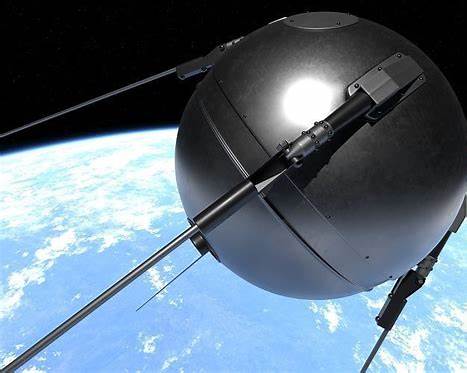
The Cold War rivalry between the United States and the Soviet Union sparked the Space Race, one of the most significant periods in space exploration history. This competition began in the late 1950s and led to rapid technological advancement.
The Soviet Union achieved the first major milestone in 1957 by launching Sputnik 1, the world’s first artificial satellite. Sputnik orbited Earth and transmitted radio signals, proving that spaceflight was possible. This event shocked the United States and triggered massive investment in space technology.
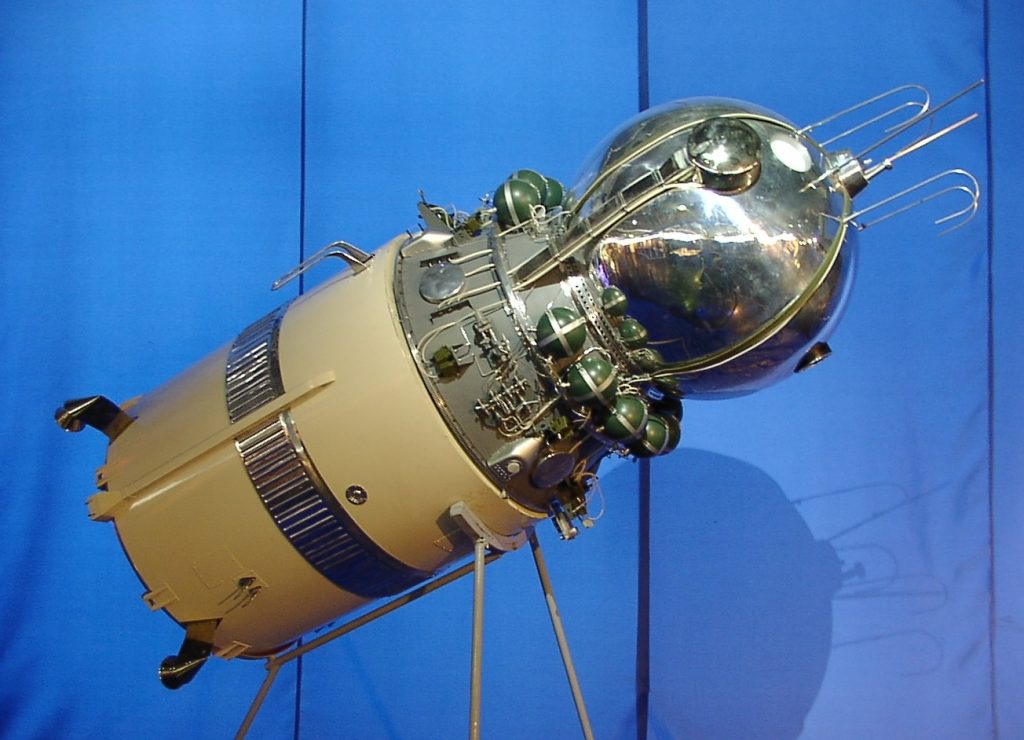
In 1961, Soviet cosmonaut Yuri Gagarin became the first human to travel into space aboard the Vostok 1 spacecraft. His successful orbit around Earth was a historic achievement and a major victory for the Soviet Union.
The United States responded by launching Project Mercury and later Project Gemini to develop human spaceflight capabilities. The ultimate goal was to land humans on the Moon. In 1969, NASA achieved this goal through the Apollo 11 mission. Astronaut Neil Armstrong became the first person to walk on the Moon, followed by Buzz Aldrin. Armstrong’s famous words, “That’s one small step for man, one giant leap for mankind,” symbolized humanity’s greatest space achievement.
The Apollo program continued until 1972, conducting six successful Moon landings and collecting valuable scientific data. These missions expanded knowledge about the Moon’s geology and origins.
Space Stations and Long-Term Space Missions
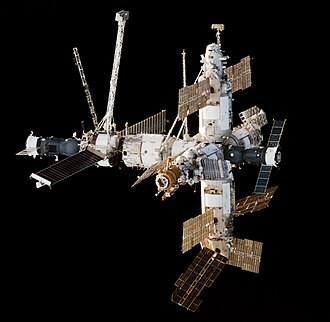
After the Moon landings, space agencies shifted their focus toward long-term human presence in space. Space stations became laboratories where astronauts could conduct scientific experiments in microgravity.
The Soviet Union launched the world’s first space station, Salyut 1, in 1971. This was followed by more advanced stations, including Mir, launched in 1986. Mir allowed astronauts to live in space for extended periods and conduct research on human survival in microgravity.
The United States launched Skylab in 1973, which served as a research laboratory for solar observation and biological experiments. Although Skylab operated for only a few years, it provided valuable scientific data.
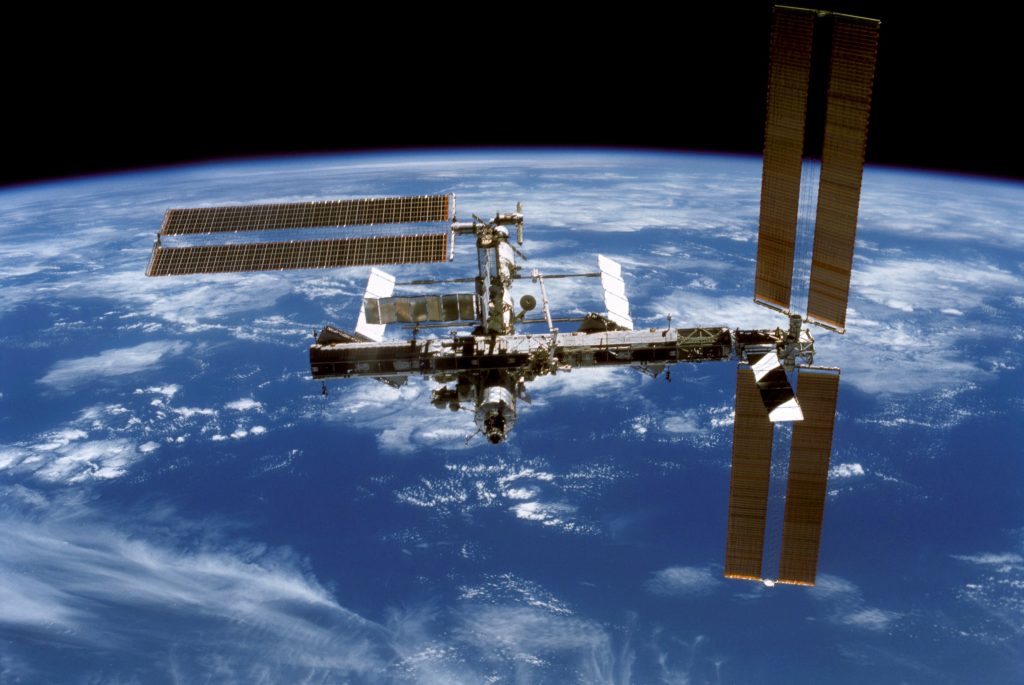
In 1998, multiple countries collaborated to build the International Space Station (ISS), marking a new era of international cooperation in space exploration. The ISS is jointly operated by NASA, Roscosmos, ESA, JAXA, and CSA. It serves as a research center where astronauts conduct experiments in biology, physics, medicine, and engineering.
The ISS also helps scientists study the effects of long-duration space travel on the human body, which is crucial for future missions to Mars and beyond.
Robotic Exploration of Planets and Deep Space
Robotic spacecraft have played a vital role in exploring space because they can travel farther and withstand harsh environments. NASA’s Voyager missions, launched in 1977, explored the outer planets and continue to send data from interstellar space today. Voyager 1 is currently the farthest human-made object from Earth.
The Hubble Space Telescope, launched in 1990, revolutionized astronomy by capturing high-resolution images of distant galaxies, nebulae, and stars. Hubble helped scientists determine the age of the universe and discover new celestial phenomena.
Mars exploration has been a major focus for robotic missions. NASA’s rovers, including Spirit, Opportunity, Curiosity, and Perseverance, have studied Mars’ surface and searched for signs of past life. The Perseverance rover, launched in 2020, is collecting samples that may be returned to Earth for analysis History of Space Exploration.
Other robotic missions have explored Jupiter, Saturn, Venus, and Pluto. NASA’s New Horizons mission provided the first close-up images of Pluto in 2015, expanding knowledge about the outer solar system.
The Rise of Commercial Space Exploration
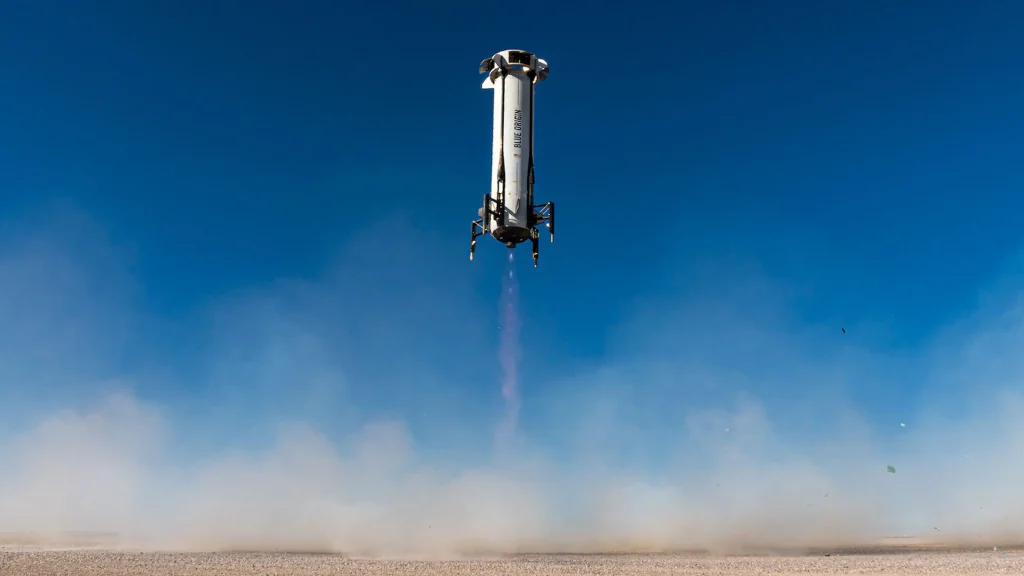
In the 21st century, private companies began playing a major role in space exploration. Companies like SpaceX, Blue Origin, and Virgin Galactic have introduced new technologies and reduced space travel costs.
SpaceX, founded by Elon Musk, developed reusable rockets such as Falcon 9 and Falcon Heavy. Reusable rockets significantly lowered launch costs and increased mission frequency. SpaceX also created the Dragon spacecraft, which transports cargo and astronauts to the ISS.
Blue Origin, founded by Jeff Bezos, focuses on suborbital space tourism and future lunar missions. Virgin Galactic aims to provide commercial space tourism experiences, allowing civilians to experience space travel.
SpaceX is currently developing the Starship spacecraft, designed for missions to the Moon, Mars, and deep space. Starship could enable human colonization of other planets in the future.
Return to the Moon and Mars Exploration
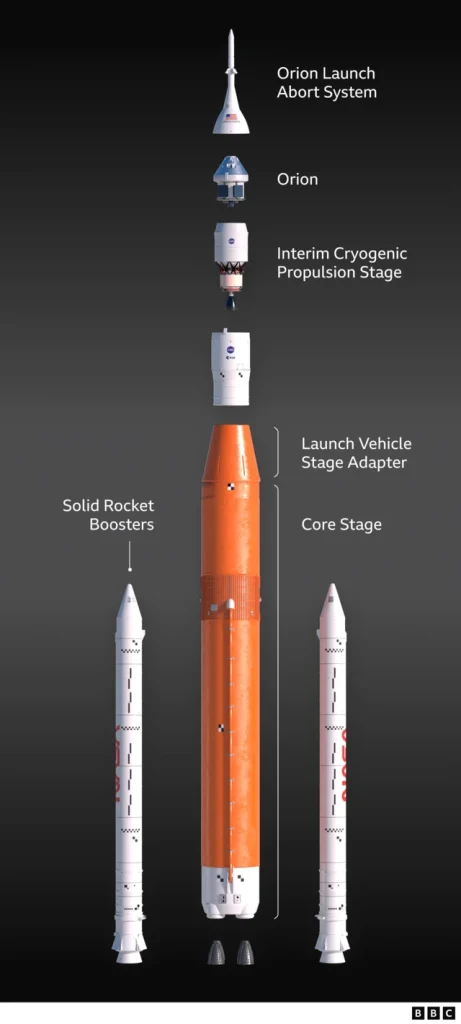
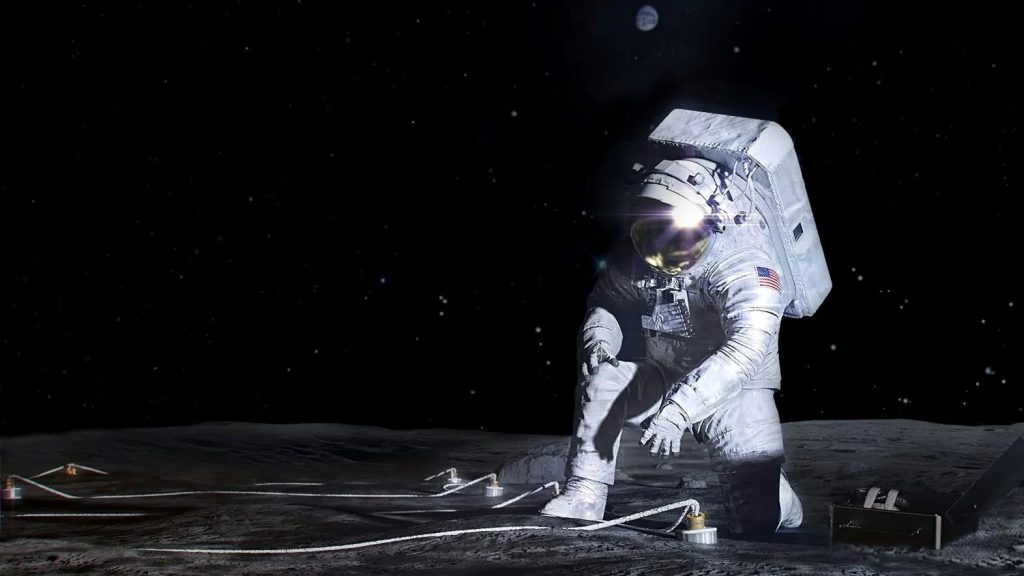
Modern space exploration focuses on returning humans to the Moon and eventually sending astronauts to Mars. NASA’s Artemis program aims to land astronauts on the Moon, including the first woman and next man, while establishing a sustainable lunar presence.
The Moon is considered a testing ground for future Mars missions. Scientists plan to build lunar bases and study resource utilization, such as extracting water ice for fuel and oxygen.
Mars remains the ultimate goal for human space exploration. Space agencies and private companies are developing technologies to support long-duration missions and human colonization. These missions face challenges such as radiation exposure, psychological stress, and life-support system development.
Future of Space Exploration
The future of space exploration is filled with exciting possibilities. Scientists are working on advanced propulsion systems, including nuclear propulsion and ion engines, which could reduce travel time to distant planets.
Space telescopes like the James Webb Space Telescope are providing deeper insights into the universe by observing the earliest galaxies and studying exoplanets that may support life.
Asteroid mining is another potential development. Asteroids contain valuable minerals and metals that could support space industries and reduce dependence on Earth’s resources.
International cooperation is expected to increase, with multiple countries contributing to lunar bases, Mars missions, and deep space exploration projects.
Conclusion
The history of space exploration reflects humanity’s curiosity, determination, and technological innovation. From ancient star observations to modern interplanetary missions, space exploration has expanded scientific knowledge and inspired generations.
The Space Race accelerated technological progress and led to remarkable achievements such as the Moon landing and the International Space Station. Robotic missions have explored distant planets and deep space, while private companies are making space travel more accessible.
Today, humanity stands on the threshold of a new era in space exploration. Plans to establish lunar bases, send humans to Mars, and explore distant star systems demonstrate that the journey into space is far from over. Space exploration not only helps scientists understand the universe but also drives technological advancements that benefit life on Earth.
As technology continues to evolve, the dream of becoming a multi-planetary species may soon become reality. The history of space exploration shows that when humans dare to dream beyond their limits, they achieve extraordinary milestones.