Non-Governmental Organizations (NGOs) play a crucial role in promoting social welfare and addressing the needs of marginalized and vulnerable sections of society. In a world where governments alone cannot meet every social challenge, NGOs act as a bridge between the state and the people. They work at the grassroots level, identify real problems, and implement practical solutions to improve the quality of life for millions.
The role of NGOs in social welfare has become increasingly important due to rising inequality, poverty, unemployment, environmental degradation, and social injustice. This article explores the meaning of NGOs, their functions, importance, key areas of work, challenges, and their overall contribution to social development.
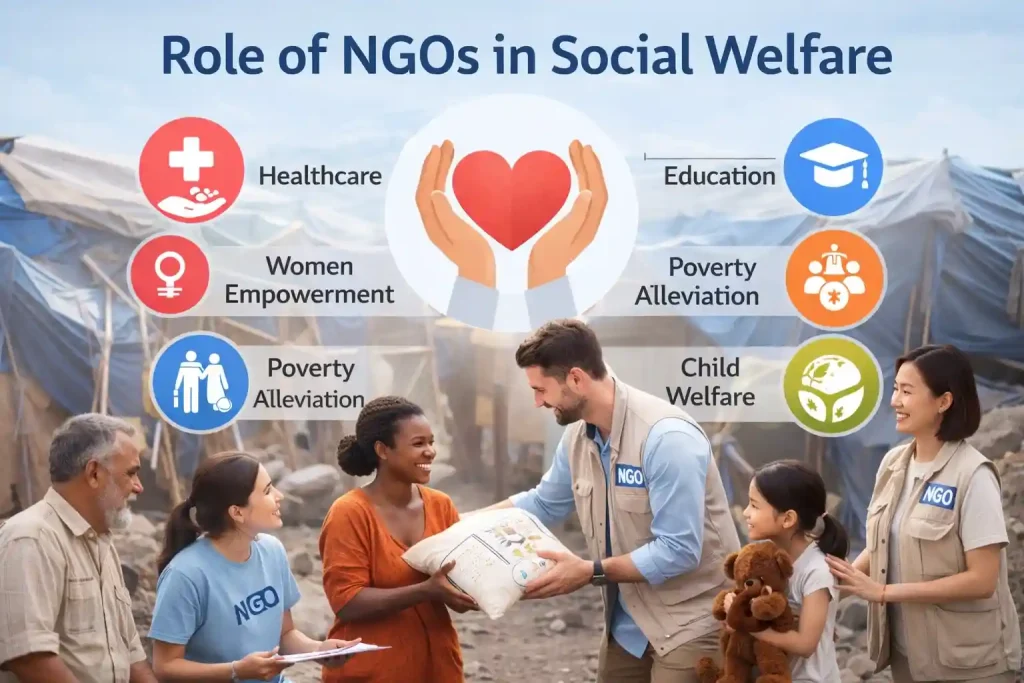
What Are NGOs?
Non-Governmental Organizations (NGOs) are voluntary, non-profit organizations that operate independently of government control. They are formed by individuals or groups who aim to work for social, cultural, environmental, humanitarian, or developmental causes.
NGOs may operate at:
- Local level
- National level
- International level
They are usually funded through donations, grants, membership fees, and sometimes government assistance.
Meaning of Social Welfare
Social welfare refers to organized efforts aimed at improving the well-being of individuals and communities. It focuses on providing basic necessities, social justice, equality, and opportunities for growth to ensure a dignified life for all.
Social welfare includes:
- Education
- Healthcare
- Poverty reduction
- Women and child welfare
- Human rights protection
- Environmental sustainability
NGOs play a vital role in achieving these objectives.
Importance of NGOs in Social Welfare
The importance of NGOs in social welfare lies in their ability to work closely with communities and respond quickly to social problems. Some key reasons why NGOs are important include:
1. Grassroots Reach
NGOs work directly with people at the ground level, especially in rural and remote areas where government services may be limited.
2. People-Centric Approach
Unlike large bureaucratic systems, NGOs focus on the actual needs of people and design solutions accordingly.
3. Innovation and Flexibility
NGOs can experiment with innovative ideas, pilot projects, and alternative development models.
4. Awareness and Advocacy
NGOs raise awareness about social issues and advocate for policy changes and human rights.
5. Support to Government Initiatives
NGOs often complement government programs by assisting in implementation, monitoring, and outreach.
Key Roles of NGOs in Social Welfare
1. Role of NGOs in Education
Education is one of the most important areas of social welfare where NGOs make a significant contribution.
NGOs:
- Run free or low-cost schools
- Provide scholarships to poor students
- Promote adult education and literacy
- Support girl child education
- Provide vocational and skill-based training
By improving access to education, NGOs help break the cycle of poverty and empower future generations.
2. Role of NGOs in Healthcare
Healthcare is another critical area where NGOs play a vital role, especially in underserved regions.
NGOs contribute by:
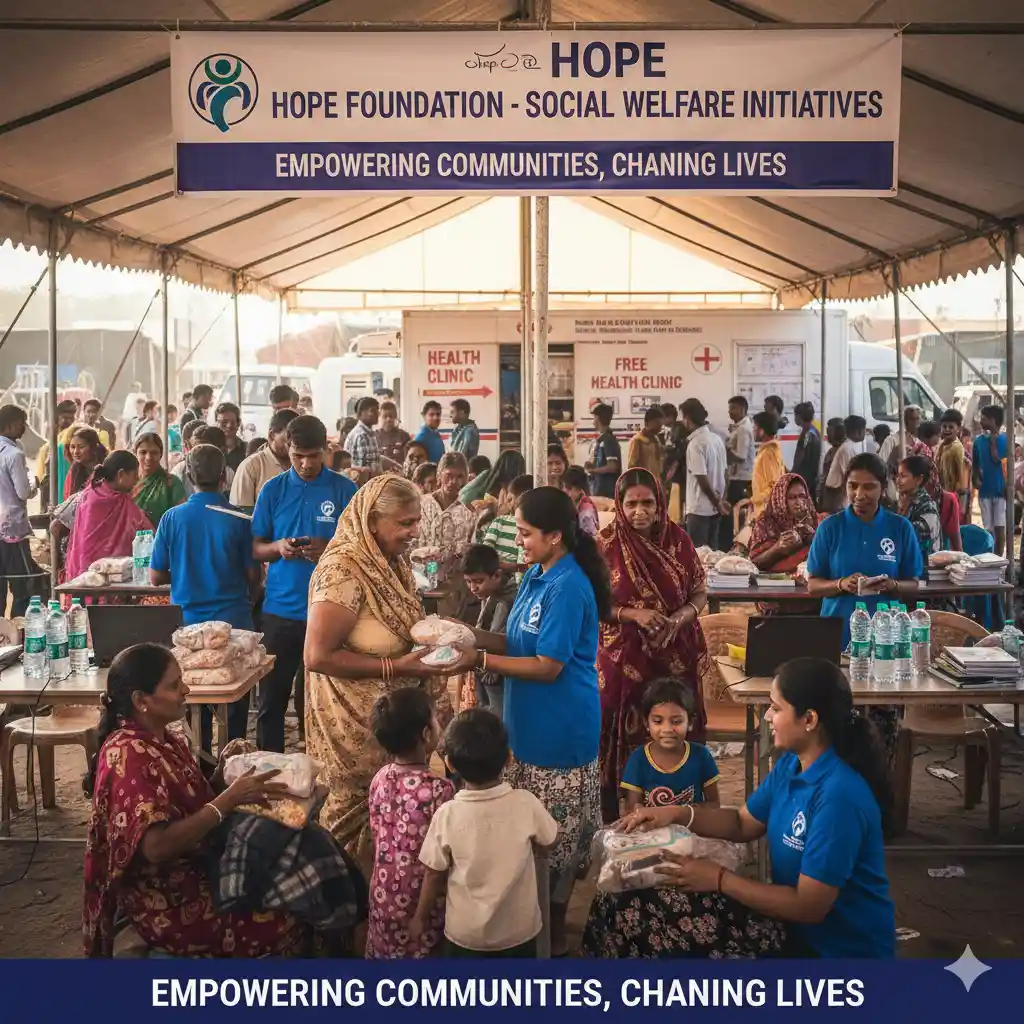
- Running health camps
- Providing maternal and child healthcare
- Promoting awareness about nutrition and hygiene
- Fighting diseases like HIV/AIDS, tuberculosis, and malaria
- Offering mental health support
Their work improves public health outcomes and reduces the burden on government healthcare systems.
3. Role of NGOs in Poverty Alleviation
Poverty remains one of the biggest social challenges in developing countries. NGOs work extensively to reduce poverty and improve livelihoods.
Key initiatives include:
- Self-help groups (SHGs)
- Microfinance and microcredit programs
- Skill development and employment training
- Support for small entrepreneurs
These efforts help people become self-reliant and economically independent.
4. Role of NGOs in Women Empowerment
NGOs play a transformative role in empowering women and promoting gender equality.
They work on:
- Women’s education and literacy
- Skill development and employment
- Awareness about legal rights
- Prevention of domestic violence
- Leadership training and participation
Women empowerment through NGOs leads to healthier families and stronger communities.
5. Role of NGOs in Child Welfare
Children are among the most vulnerable groups in society. NGOs actively work to protect their rights and welfare.
Their activities include:
- Combating child labor
- Supporting orphaned and street children
- Providing nutrition and healthcare
- Promoting child rights and protection
NGOs ensure that children get a safe environment to grow and develop.
6. Role of NGOs in Environmental Protection
Environmental sustainability has become a major social concern. NGOs play a key role in protecting natural resources.
They contribute by:
- Promoting environmental awareness
- Supporting afforestation programs
- Fighting pollution and climate change
- Encouraging sustainable practices
Environmental NGOs help balance development with ecological preservation.
7. Role of NGOs in Human Rights Protection
NGOs act as watchdogs to protect human rights and promote social justice.
Their work includes:
- Legal aid and support to victims
- Advocacy against discrimination
- Protection of minority and marginalized groups
- Campaigns against human rights violations
They ensure accountability and strengthen democratic values.
Role of NGOs in Disaster Relief and Rehabilitation
During natural disasters such as floods, earthquakes, and pandemics, NGOs play a critical role.
They provide:
- Emergency relief (food, shelter, medical aid)
- Rehabilitation and reconstruction support
- Psychological counseling
- Long-term recovery programs
NGOs often reach affected areas faster than government agencies.
NGOs and Community Development
Community development is a core focus area for NGOs. They promote participation, leadership, and collective action within communities.
Activities include:
- Rural development projects
- Sanitation and clean water initiatives
- Housing and infrastructure development
- Awareness programs on social issues
This strengthens social cohesion and sustainable development.
Challenges Faced by NGOs
Despite their important role, NGOs face several challenges:
1. Financial Constraints
Limited funding affects sustainability and scale of operations.
2. Accountability and Transparency
Some NGOs face criticism over misuse of funds or lack of transparency.
3. Regulatory Restrictions
Strict government regulations can limit NGO activities.
4. Lack of Skilled Personnel
Many NGOs struggle to attract trained professionals.
5. Dependence on Donations
Over-reliance on external funding can affect independence.
NGOs and Government Collaboration
Collaboration between NGOs and governments can enhance social welfare outcomes.
Benefits of collaboration include:
- Better policy implementation
- Improved service delivery
- Wider reach of welfare schemes
- Efficient monitoring and evaluation
Public-private-NGO partnerships are essential for inclusive development.
Role of NGOs in Achieving Sustainable Development Goals (SDGs)
NGOs play a key role in achieving the United Nations Sustainable Development Goals (SDGs).
They contribute to:
- No poverty
- Zero hunger
- Quality education
- Gender equality
- Clean water and sanitation
- Climate action
Their localized efforts support global development agendas.
Future Role of NGOs in Social Welfare
The role of NGOs is expected to grow in the future due to:
- Increasing social inequalities
- Climate change challenges
- Urbanization and migration
- Technological advancements
NGOs must adopt digital tools, strengthen transparency, and collaborate with stakeholders to enhance their impact.
Conclusion
The role of NGOs in social welfare is indispensable in today’s world. They act as agents of change by addressing social problems, empowering marginalized communities, and promoting inclusive development. From education and healthcare to poverty alleviation and environmental protection, NGOs contribute significantly to building a just and equitable society.
While challenges remain, strengthening NGO capacity, transparency, and collaboration with governments can maximize their impact. A society that supports NGOs is better equipped to achieve sustainable development and social justice for all.