Introduction
Climate change is one of the most pressing challenges facing humanity in the twenty-first century. It refers to long-term shifts in temperatures, precipitation patterns, and weather extremes, primarily driven by human activities such as the burning of fossil fuels, deforestation, industrial processes, and unsustainable agricultural practices. While Earth’s climate has changed naturally over geological time, the current rate and scale of change are unprecedented and largely attributed to human influence. The impact of climate change is far-reaching, affecting natural ecosystems, human health, economies, food security, water availability, and global stability. Understanding these impacts is essential for developing effective strategies to mitigate climate change and adapt to its consequences.
Causes of Climate Change
The primary driver of modern climate change is the increase in greenhouse gases in the atmosphere. Carbon dioxide (CO₂), methane (CH₄), nitrous oxide (N₂O), and fluorinated gases trap heat within the Earth’s atmosphere, creating a greenhouse effect that warms the planet. The largest source of CO₂ emissions is the burning of fossil fuels—coal, oil, and natural gas—for electricity, transportation, and industry. Deforestation further exacerbates the problem by reducing the planet’s capacity to absorb carbon dioxide, while agriculture contributes significantly through methane emissions from livestock and rice paddies, as well as nitrous oxide from fertilizers.
Urbanization, rapid industrial growth, and increased consumption patterns have intensified these emissions. As developing economies expand and global population rises, the demand for energy, food, and resources grows, placing additional pressure on the climate system. Without significant intervention, these trends are expected to continue, amplifying the impacts of climate change.
Rising Global Temperatures
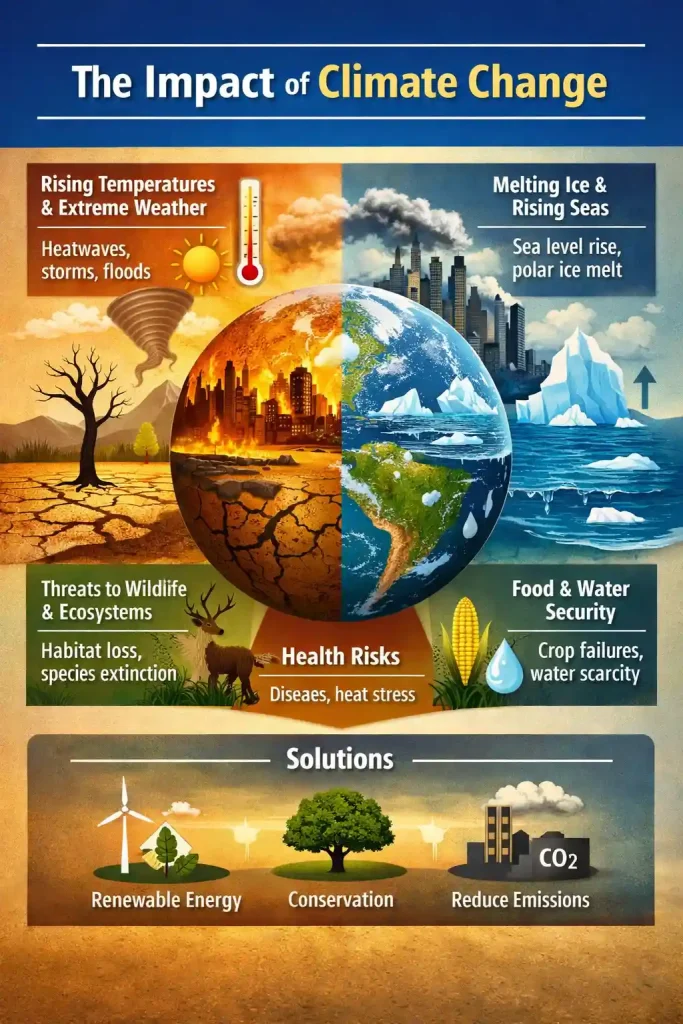
One of the most evident impacts of climate change is the steady rise in global average temperatures. Over the past century, the Earth’s surface temperature has increased significantly, leading to more frequent and intense heatwaves. These rising temperatures affect both natural and human systems. Heat stress poses serious health risks, particularly for vulnerable populations such as the elderly, children, and outdoor workers. Prolonged heatwaves can lead to dehydration, heatstroke, cardiovascular stress, and increased mortality rates.
Higher temperatures also influence energy demand, as the need for cooling increases during hot periods. This can strain power grids and lead to higher greenhouse gas emissions if the energy comes from fossil fuel sources. In addition, rising temperatures can reduce labor productivity, especially in regions where work is performed outdoors, impacting economic output and livelihoods.
Melting Ice and Rising Sea Levels
Climate change has accelerated the melting of glaciers, ice caps, and polar ice sheets. The Arctic region, in particular, is warming at more than twice the global average rate, leading to significant loss of sea ice. As ice melts, it contributes to rising sea levels, which pose a serious threat to coastal and low-lying areas.
Sea-level rise increases the risk of coastal flooding, erosion, and saltwater intrusion into freshwater aquifers. Millions of people living in coastal cities and island nations face displacement as their homes and infrastructure become increasingly vulnerable. Small island developing states are especially at risk, with some facing the possibility of becoming uninhabitable. The economic costs associated with sea-level rise include damage to property, loss of tourism revenue, and the expense of building protective infrastructure such as sea walls.
Extreme Weather Events
Climate change is closely linked to an increase in the frequency and intensity of extreme weather events. These include hurricanes, cyclones, floods, droughts, wildfires, and heavy rainfall events. Warmer ocean temperatures can fuel stronger tropical storms, while increased atmospheric moisture leads to more intense precipitation and flooding.
Droughts, on the other hand, are becoming more severe and prolonged in many regions due to changing rainfall patterns and higher evaporation rates. These extreme events can devastate communities, destroy infrastructure, disrupt food production, and lead to significant economic losses. They also place immense pressure on emergency response systems and humanitarian aid efforts.
Impact on Ecosystems and Biodiversity
Natural ecosystems are highly sensitive to changes in climate. Rising temperatures, altered precipitation patterns, and shifting seasons disrupt habitats and threaten biodiversity. Many plant and animal species are struggling to adapt to rapid environmental changes, leading to shifts in species distribution and, in some cases, extinction.
Coral reefs are among the most vulnerable ecosystems. Increased ocean temperatures cause coral bleaching, a process in which corals expel the algae that provide them with nutrients and color. Prolonged bleaching can lead to widespread coral death, affecting marine biodiversity and the livelihoods of communities that depend on reefs for fishing and tourism to impact of climate change .
Forests are also under threat from climate change. Higher temperatures and changing rainfall patterns increase the risk of pests, diseases, and wildfires. Forest degradation not only reduces biodiversity but also weakens one of the planet’s most important carbon sinks, creating a feedback loop that further accelerates climate change.
Effects on Agriculture and Food Security
Climate change has profound implications for agriculture and global food security. Changes in temperature, rainfall, and the frequency of extreme weather events directly affect crop yields and livestock productivity. While some regions may experience temporary benefits from longer growing seasons, many areas—particularly in developing countries—face declining agricultural output.
Droughts can reduce water availability for irrigation, while floods can destroy crops and degrade soil quality. Heat stress affects livestock health and productivity, leading to reduced milk and meat production. Additionally, climate change can alter the distribution of pests and diseases, increasing crop losses and the need for chemical controls.
Food insecurity is likely to increase as agricultural systems struggle to adapt. Rising food prices, reduced availability, and increased volatility in food markets disproportionately affect low-income populations, exacerbating poverty and inequality.
Water Resources and Availability
Water resources are closely linked to climate patterns, and climate change is disrupting the global water cycle. Some regions are experiencing increased rainfall and flooding, while others face chronic water shortages. Melting glaciers, which serve as natural water reservoirs for millions of people, threaten long-term water supply in many mountainous regions.
Water scarcity has serious implications for drinking water, sanitation, agriculture, and industry. Competition for limited water resources can increase tensions between communities and even between nations. In urban areas, inadequate water management combined with climate change can lead to severe water crises, affecting public health and economic development.
Human Health Impacts
Climate change poses significant risks to human health. Rising temperatures and extreme weather events increase the incidence of heat-related illnesses and injuries. Changes in climate also influence the spread of infectious diseases, as warmer conditions expand the habitats of disease-carrying vectors such as mosquitoes.
Air quality can worsen due to higher temperatures and increased wildfires, leading to respiratory and cardiovascular problems. Mental health is another important but often overlooked aspect, as communities affected by climate-related disasters experience stress, anxiety, and trauma. Vulnerable populations, including children, the elderly, and those with pre-existing health conditions, are particularly at risk.
Economic and Social Consequences
The economic impact of climate change is substantial and growing. Damage to infrastructure from extreme weather events, reduced agricultural productivity, health-related costs, and disruptions to supply chains all contribute to economic losses. Developing countries, which often have limited resources for adaptation and disaster response, are disproportionately affected.
Climate change also has social implications, including increased migration and displacement. As environmental conditions deteriorate, people may be forced to leave their homes in search of safer and more stable livelihoods. This can strain urban areas, exacerbate social tensions, and challenge governance systems.
Climate Change and Global Inequality
While climate change is a global problem, its impacts are unevenly distributed. Countries that have contributed the least to greenhouse gas emissions often face the most severe consequences. This raises important ethical and equity issues, highlighting the need for international cooperation and climate justice.
Addressing climate change requires acknowledging these disparities and ensuring that mitigation and adaptation efforts support vulnerable communities. Financial assistance, technology transfer, and capacity-building initiatives are essential for enabling developing countries to respond effectively to climate challenges.
Mitigation and Adaptation Strategies
Mitigating climate change involves reducing greenhouse gas emissions and enhancing carbon sinks. This can be achieved through the transition to renewable energy sources, improvements in energy efficiency, sustainable transportation, and changes in land-use practices. Protecting and restoring forests, wetlands, and other natural ecosystems play a crucial role in absorbing carbon dioxide from the atmosphere to impact of climate change.
Adaptation strategies focus on reducing vulnerability and building resilience to the impacts of climate change. These include developing climate-resilient infrastructure, improving water management, adopting climate-smart agricultural practices, and strengthening disaster preparedness and response systems. Education, awareness, and community engagement are key components of successful adaptation efforts.
The Role of Individuals and Communities
While governments and industries play a major role in addressing climate change, individuals and communities also have an important part to play. Reducing energy consumption, adopting sustainable lifestyles, supporting environmentally responsible businesses, and advocating for climate-friendly policies can collectively make a significant difference.
Community-led initiatives, such as local renewable energy projects, conservation efforts, and sustainable urban planning, demonstrate the power of collective action. By fostering a culture of environmental responsibility, societies can accelerate the transition toward a more sustainable future.
Conclusion
The impact of climate change is profound, complex, and interconnected, affecting nearly every aspect of life on Earth. From rising temperatures and sea levels to threats to food security, water resources, human health, and economic stability, the consequences of climate change demand urgent and coordinated action. While the challenges are immense, there are also opportunities to create a more sustainable, equitable, and resilient world.
Addressing climate change requires a global commitment to reducing emissions, adapting to unavoidable impacts, and supporting vulnerable communities. Through science-based policies, technological innovation, international cooperation, and individual responsibility, it is possible to limit the worst effects of climate change and safeguard the planet for future generations. The choices made today will determine the quality of life for centuries to come, making climate action not just an environmental necessity but a moral imperative.